Historical and fantasy wargaming! Battle reports, reviews, armylists and rules. Classical Greece to WWII, Warhammer, Lord of the Rings and 40k. We now have a new website! - Also find us on Facebook!
Showing posts with label ancient greeks. Show all posts
Monday, 10 July 2017
Tuesday, 3 July 2012
The straits of Brscak and Golac, 394 BC
Apologies for the lack of blog posts recently but I've been doing allot of painting and not much gaming. Since painting my Ethiopian force for Baro Gorge I have been working on my Royalist-Rhinelander force for the ECW game in October as well as painting up the new Empire models that I bought in May, I've also finished off a large band of Boxer Rebels for a skirmish game I'm working on for tale of two gamers and I'm also trying to get the French forces finished before I start touring the clubs with Baro Gorge. To cap it all off I'm also working quite hard on getting my 8 ft by 4ft gaming Mediterranean style gaming board finished off. Any way as you can see I've got my hands full with allot of exciting gaming projects (did i mention the 2000 model re-enactment of Balaclava I'm working on) which will hopefully be gracing your screen soon. If you can stand my excuse making for a little longer I'll also say that my camera card broke and I currently have to beg, borrow or steal cameras to record my games.
Anyway on with the report. Today we were having a game of naval conflicts in the ancient world, using top down paper models and rules I had been given after a lareg Peloponessian war game at my house. The rules are fairly straight forwad.
Each ship moves 6" (losing 2" for each 90 degree or lower turn it makes). If you are over 3" away from an enemy ship you can choose to ram the ship or shear its oars (this is where the ship runs alongside another one ramming, off its oars as it goes). If sucessfully rammed (5+ on the rear or front 3+ on the sides) then the ship is sunk, if sucessfully sheared (5+, 4+ for Athenians) then the ship moves at half speed for the rest of the game, if sheared twice then it is removed. You can also choose to board an enemy ship from what ever range, in a boarding action both players roll off (with Spartans winning draws) and the player who rolls the highest boards the enemy ship and scuttles it (I have often thought it would be fun to allow the boarder to capture the enemy ship and treat both ships as having been sheared).
The story behind today's action was that a Corinthian fleet, leaving the safety Molat harbour (an island off the coast of Illyria in the Adriatic), was beset upon by a similar sized Spartan fleet whilst traversing the straits between the islands of Brscak and Golac. Having been at war with the Corinthians for a year now the Spartans were determined to crush this small force in the Adriatic.
Our normal band of gamers was today joined by a good many others. The Spartan fleet was split into two groups of six ships under the command of my Napoleonic gaming partner and another who was new to wargaming. The Corinthian fleet was split into three groups of four ships with us two from tale of two gamers and another who was new to wargaming in command of the fleet. I'm the four on the left.
As the Spartan fleet advanced I ordered my four ships to hold their positions and keep just out of range of a ram attack from the Spartan fleet in the hope that should the dare to approach more than 6" away from my ships we would ram em! The central Corinthian fleet on the other hand sent one of their ships charging off to ram the lead ship of the spearhead of Spartans who had split their fleet to deal with the central Corinthian ships and the blockade runners from Golac.
The Corinthian ship in the centre, who's captain had charged her straight for the Spartans, failed to pierce the Spartanman's hull and was boarded and scuttled by the Spartan crew as the other two sheared its oars along both sides.
The cautious Spartan fleet facing off against my ships threw caution to the wind and rowed full pelt for my line of ships, upon which there was many calls and shouts for the drums to start up their beat and fast! On the right however the blockade runners faced off the Spartan fleet with neither opponent making a move.
With the spartan fleet with in easy reach to ram or shear I let loose the oars and went speeding into the enemy vessels. Three of my ships tried to shear the spartan craft but in the confusion only one of the ships was successful. My last ships attempted to ram the Spartan adversary but failed to penetrate and prepared to counter the inevitable boarding party. In the centre the three remaining vessels rammed and sheared into the closest Spartanman, shearing and sinking.
And on the right there was nought but inactivity.
With my boat's charge having been avoided like a scythed chariot or an elephant upon a well drilled phalanx, being let through the open ranks unable to change course with the speed of the charge, I was now facing the prospect of a difficult manoeuvre to re-face the Spartan fleet and the possibility of being rammed whilst in the process. My one ship that had hit home however was boarded by the Spartan warriors on the vessel it had failed to hull, and they scuttled it. In the centre the remaining Spartan ships counter rammed the ships that had just sunk their companion vessel and hulled and sank them both leaving but one Corinthianman standing.
On the right the inactive Spartans, having seen the centre dealt with, decided to start up the offencive on that front and they rammed into one of the Corinthian craft, but they failed to pierce its bow and were, in their turn, boarded.
My three remaining vessels turned on the spot, two of them rammed the Spartans in the flank hulling and sinking two of them. My last ship rammed the sheared vessel in the stern but failed to penetrate it and so awaited the Spartan boarders.
In the centre the Corinthian about turned, ramming one of the Spartan vessels in the side, hulling and sinking it. And on the far right the inactivity seemed to be paying off as the Corinthian ships quickly overwhelmed all but one of the Spartan vessels with not a loss to their own fleet.
However the next phase began to see the Spartans superior fighters take their toll and all but one of my vessels were hulled and sunk by a side ram. The last remaining Corinthian vessel in the centre was also broken up, the blockade runners also lost a ship to the vessel they had failed to deal with last turn.
The Spartan ships on the right and centre flocked to my last remaining ship like vultures to carrion, three of the vessels ran up alongside her and the warriors from two of them ran on board and scuttled her whilst her warriors were scuttling the other Spartanman, the stranded warriors surrendered to the Atticans. The Golac fleet had by now scuttled the last Spartan in their midst and were setting out to try and brake through the remaining Spartan vessels on the shore of Brscak. The forces were evenly matched with the Spartans having an extra vessel which had been sheared.
As the boats began to approach each other one of the Spartan vessels was still facing the shore, so far the Spartans were outgunned if they could not turn their other vessel in time. Again the Corinthians sat their ships just out of range of the Spartans, waiting on the Spartan aggression to make the first move and gain the ram!
And true enough the Spartans moved just within ram range and found themselves all immediately rammed in their bows. The Sheared vessel's prow gave way and caved in upon the ram sending her to the bottom, whilst the other two ships withstood the ram and along with the third began their boarding actions.
One of the Corinthian vessels was overrun and scuttled but the other two both launch counter boarders and got across to the enemy vessels, sinking them. In the confusion that followed with the last four ships two more were also hulled and went to the bottom.
Anyway on with the report. Today we were having a game of naval conflicts in the ancient world, using top down paper models and rules I had been given after a lareg Peloponessian war game at my house. The rules are fairly straight forwad.
Each ship moves 6" (losing 2" for each 90 degree or lower turn it makes). If you are over 3" away from an enemy ship you can choose to ram the ship or shear its oars (this is where the ship runs alongside another one ramming, off its oars as it goes). If sucessfully rammed (5+ on the rear or front 3+ on the sides) then the ship is sunk, if sucessfully sheared (5+, 4+ for Athenians) then the ship moves at half speed for the rest of the game, if sheared twice then it is removed. You can also choose to board an enemy ship from what ever range, in a boarding action both players roll off (with Spartans winning draws) and the player who rolls the highest boards the enemy ship and scuttles it (I have often thought it would be fun to allow the boarder to capture the enemy ship and treat both ships as having been sheared).
The story behind today's action was that a Corinthian fleet, leaving the safety Molat harbour (an island off the coast of Illyria in the Adriatic), was beset upon by a similar sized Spartan fleet whilst traversing the straits between the islands of Brscak and Golac. Having been at war with the Corinthians for a year now the Spartans were determined to crush this small force in the Adriatic.
Our normal band of gamers was today joined by a good many others. The Spartan fleet was split into two groups of six ships under the command of my Napoleonic gaming partner and another who was new to wargaming. The Corinthian fleet was split into three groups of four ships with us two from tale of two gamers and another who was new to wargaming in command of the fleet. I'm the four on the left.
As the Spartan fleet advanced I ordered my four ships to hold their positions and keep just out of range of a ram attack from the Spartan fleet in the hope that should the dare to approach more than 6" away from my ships we would ram em! The central Corinthian fleet on the other hand sent one of their ships charging off to ram the lead ship of the spearhead of Spartans who had split their fleet to deal with the central Corinthian ships and the blockade runners from Golac.
The Corinthian ship in the centre, who's captain had charged her straight for the Spartans, failed to pierce the Spartanman's hull and was boarded and scuttled by the Spartan crew as the other two sheared its oars along both sides.
The cautious Spartan fleet facing off against my ships threw caution to the wind and rowed full pelt for my line of ships, upon which there was many calls and shouts for the drums to start up their beat and fast! On the right however the blockade runners faced off the Spartan fleet with neither opponent making a move.
With the spartan fleet with in easy reach to ram or shear I let loose the oars and went speeding into the enemy vessels. Three of my ships tried to shear the spartan craft but in the confusion only one of the ships was successful. My last ships attempted to ram the Spartan adversary but failed to penetrate and prepared to counter the inevitable boarding party. In the centre the three remaining vessels rammed and sheared into the closest Spartanman, shearing and sinking.
And on the right there was nought but inactivity.
With my boat's charge having been avoided like a scythed chariot or an elephant upon a well drilled phalanx, being let through the open ranks unable to change course with the speed of the charge, I was now facing the prospect of a difficult manoeuvre to re-face the Spartan fleet and the possibility of being rammed whilst in the process. My one ship that had hit home however was boarded by the Spartan warriors on the vessel it had failed to hull, and they scuttled it. In the centre the remaining Spartan ships counter rammed the ships that had just sunk their companion vessel and hulled and sank them both leaving but one Corinthianman standing.
On the right the inactive Spartans, having seen the centre dealt with, decided to start up the offencive on that front and they rammed into one of the Corinthian craft, but they failed to pierce its bow and were, in their turn, boarded.
My three remaining vessels turned on the spot, two of them rammed the Spartans in the flank hulling and sinking two of them. My last ship rammed the sheared vessel in the stern but failed to penetrate it and so awaited the Spartan boarders.
In the centre the Corinthian about turned, ramming one of the Spartan vessels in the side, hulling and sinking it. And on the far right the inactivity seemed to be paying off as the Corinthian ships quickly overwhelmed all but one of the Spartan vessels with not a loss to their own fleet.
However the next phase began to see the Spartans superior fighters take their toll and all but one of my vessels were hulled and sunk by a side ram. The last remaining Corinthian vessel in the centre was also broken up, the blockade runners also lost a ship to the vessel they had failed to deal with last turn.
The Spartan ships on the right and centre flocked to my last remaining ship like vultures to carrion, three of the vessels ran up alongside her and the warriors from two of them ran on board and scuttled her whilst her warriors were scuttling the other Spartanman, the stranded warriors surrendered to the Atticans. The Golac fleet had by now scuttled the last Spartan in their midst and were setting out to try and brake through the remaining Spartan vessels on the shore of Brscak. The forces were evenly matched with the Spartans having an extra vessel which had been sheared.
As the boats began to approach each other one of the Spartan vessels was still facing the shore, so far the Spartans were outgunned if they could not turn their other vessel in time. Again the Corinthians sat their ships just out of range of the Spartans, waiting on the Spartan aggression to make the first move and gain the ram!
And true enough the Spartans moved just within ram range and found themselves all immediately rammed in their bows. The Sheared vessel's prow gave way and caved in upon the ram sending her to the bottom, whilst the other two ships withstood the ram and along with the third began their boarding actions.
One of the Corinthian vessels was overrun and scuttled but the other two both launch counter boarders and got across to the enemy vessels, sinking them. In the confusion that followed with the last four ships two more were also hulled and went to the bottom.
After being chased almost to the beach of Brscak the Corinthian vessel finally turned and rammed the Spartanman's prow, but the ram failed to breach the bow wood and the Spartan warriors surged upon the ship and accepted the Captain's surrender. Spartan victory
This game always proves an interesting one as the fleets are eact replicas of each other with neither having higher quality or quantity of vessels. The only differences are in that one side is better at boarding and the other shearing. However I can still remark that it would have been a clear Corinthian victory and not nearly by such a small margin had we employed better tactics and been a more unified force. The Golac blockade runners inactivity let the centre fall early and had they overwhelmed the Spartans earlier they could well have saved it, this would have led to the Centre being quite a resounding Corinthian victory (as it was it was only a marginal Spartan one) and this would probably have made up for my abysmal dice rolling on the left, however it was "the closest run thing you ever did see" when it came to the final showdown and the Spartan fleet escaped with but one vessel remaining, surly not enough to make it safely from the Adriatic to Sparta in war time!
Monday, 31 October 2011
A very Pyrrhic War - Securing the Ofanto
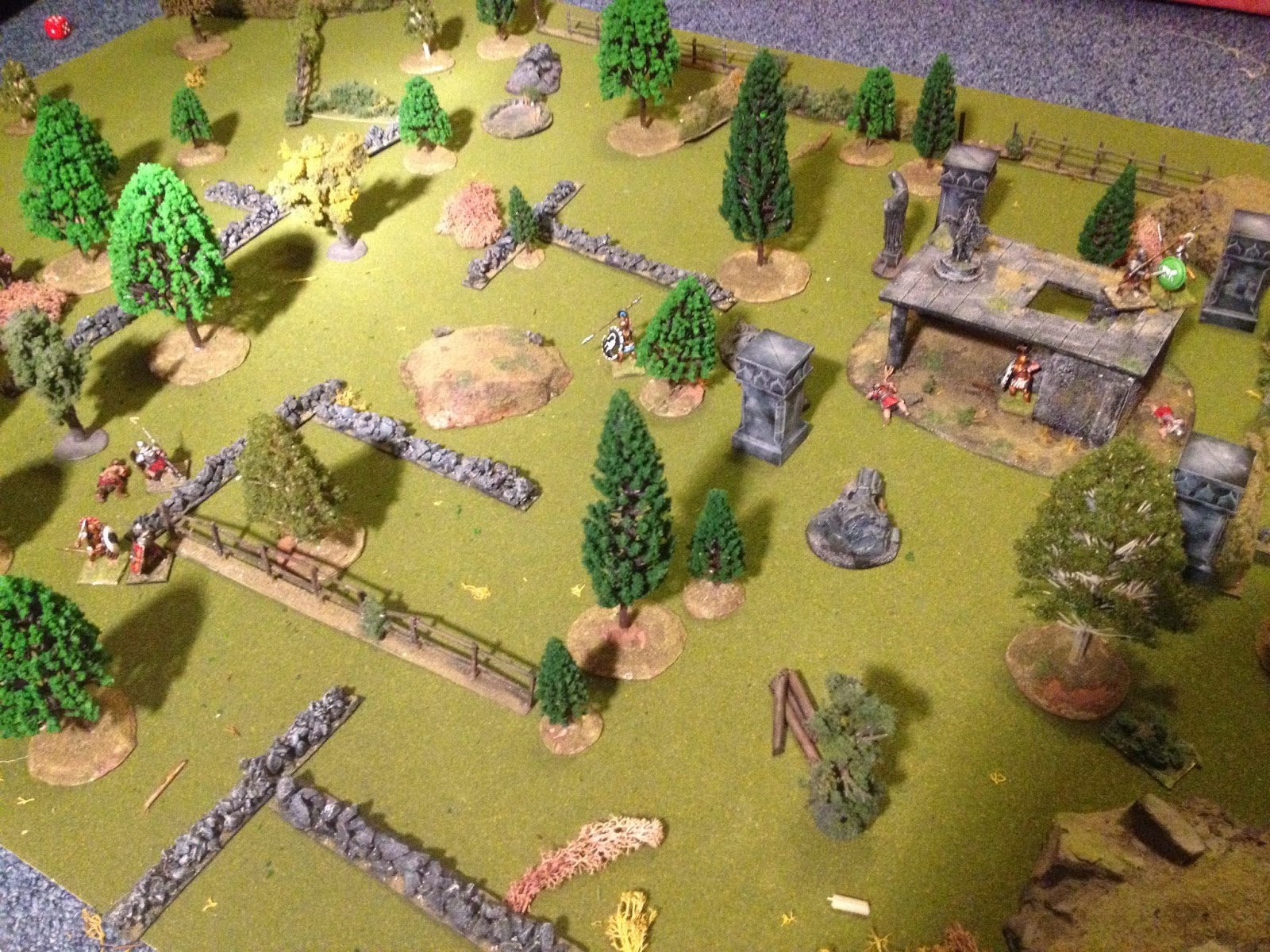
The year was 278 BC, Pyrrhus' army had, the year beore, defeated the roman army at Asculum and now he was heading south. But a roman army under the command of Publius Fabius had positioned itself on the south bank of the river Ofanto standing directly in between Asculum and Taranto and the romans knew that soon Pyrrhus would have to cross by way of the single brdge or ford. Pyrrhus dispatched a small army led by the Samnite king and Hermotenes (also called Hector) of Corinth to break the roman army defending it reasoning that if his men were better than the romans they could shorly break through the bridge or ford.
Pyrrhics
- Hermotenes of Corinth (special character)
- Samnite king (barbarian warlord)
- Dionysus the Honest of Syracause (Roman senior commander)
- Bruttian heir (barbarian chieftain)
- 16 Tarentine hoplites (spartan hoplites)
- 14 Samnite hoplites (spartan hoplites)
- 14 Scythian mercenarys (hun horse archers without spears)
- 7 Cataphracts (samnite cavalry)
- 13 Thessalian cavalry (armoured hun horse archers)
- 10 Epiroite peltasts (persian immortals without spears)
- Publius fabius (Roman senior commander)
- Augustus Vespasian (Roman junior commander)
- 11 Triarii (Legionnaries)
- 9 Triarii (Legionnaries)
- 12 Hastati (un armoured raw recruits)
- 10 Hastati (un armoured raw recruits)
- 11 Princepes (drilled raw recruits)
- 9 princepes (drilled raw recruits)
- 12 Velites (legion light infantry)
- 10 Velites (legion light infantry)
- 8 Velites (legion light infantry)
- 16 Equites (Illyrians)
- 18 Po valley celtic cav (celtic cav)
- 48 Po valley celts (celtic warriors)
The pyrrhics adopted practically the same deployment, their 15 by 4 man Phalanx forming a wall infront of the bridge with peltasts on the flank. Their much stronger cavalry deployed towards the ford preparing to charge across supported by flanking fire from the horse archers.
The game started with the Samnite king and his samnite and Thessalian horsemen charging straight for the ford, Fabius seemed to have had the same idea and his cavalry struck for it as well. allot slower the great blocks of infantry made for the bridge with the hoplites making better ground due to the roman Velites holding back the majority of the roman infantry from marching.
By the next turn the first Blood was spilled as the Samnite king lead his cavalry in a charge across the ford, into Fabius' cavalry who were all killed to a man (including the right honurable Fabius) and straight into the celtic cavalry who turned and bolted. The Pyrrhics had their first men over the river! Over in the east the Pyrrhics started marching their Hoplites across the river, but instead of being charged by the Roman infantry the Roman Velites came to a halt holding the rest of the infantry back and began to plet the Hoplites with javeins and rocks, but they had no effect on the phalanxes.
The Pyrrhics took their oppurtunity and with the Ofanto crossed they charged into the midst of the Roman army like wolves in a flock of sheep. Dionysus charged his Phalanx towards some of the Velites who fled causing panic through the back ranks, skillfully Dionysus managed to redirect his phalanx in mid charge towards some other velites and soon the entire centre of the roman battle lin was in flight and the Tarentines were only stopped from single handedly routing the enemy by a firm unit of Triarii, whom they engaged with. Over in the west the cavalry met with just as much success and they sent a unit of Hastatii running along with the celtic cavalry. When the dust settled we could see that half of the Roman army was running away and with their army general dead it would be hard to rally them.
Dionysus storms across the Ofanto, smashing apart the roman Centre
The Pyrrhics continued to take full advantage of the fleeing Romans cutting down all but one of the units of lone standing Triarii with minot casualties of but 3 men, however it was not all fun and games for the pyrrhics and one of their very powerful (and expensive) Phalanxes was cut down as it fled from Vespasian's Princepes.
Seeing how Vespasian had so easily cut down the Hoplites the Romans start to rally and even manage to force some of the Thessalian cavalry to flee for the ford. However Hermotenes took the initiative and charged his Samnites into Vespasian's flank and he fled (what an example!). The scythian mercenary's took this moment to cross the river by the bridge, leaving just the lone Peltast (all his comrades had been killed in the missile duel that had been going on with the celts) to defend the north bank
Vespasian rallied but to the rear of his army. The allied cavalry stormed off south sending the Princepes scatterling and thundering into the Velites. growing bord with the Peltasts the Po valley celts turned their missile fire on the Samnites taking out their back rank.
The allied cavalry continued their thunderous charge south getting further and further away from the river, sending the Velites fleeing and clashing with the Celtic cavalry. Hermotenes and his much depleted unit of Sanites took action and the five of the charged into all 42 Celts.
In an amazing turn of events Hermotenes sent the celts fleeing and cut them all down as they ran, the celtic horse was also annihilated and both Phalanxes moved south. Taking the initiative Vespasian dived towards the undefended bridge and sent the Scythians bolting north as he captured the bridge.
It was quick work for the Pyrrhics to finnish off the Romans and the only unit (in the entire battle) to survive was some four or five Velites who fled the field.
The final stand of Vespasian was a dramatic moment as Hermotenes and Dionysus with their hoplites surrounding him ordered his surrender, but instead he drew his sword and lept into battle souting "Death or Glory" after this he was promptley cut down and his head mounted on the tusk of one of Pyrrhus' elephants.
Now Pyrrhus' army was free to head south and onwards to Sicilly
Game review: As Owen called it "The closest run thing you ever saw!". We've come to the conclusion (after many years) that we are equal opponents, we've fought many battles and defeated may opponents together but the battles we fight always end with annihilation and with one of us having only a handfull of men left, "very bloody afairs" as we've now termed them.
Historic review: With the Ofanto crossed Pyrrhus could continue his march and it would be hard work for the Romans to block him again. with stories of rome's defeat flying all over italy and beyond, how they fled at the sight of the Tartentines and how their general was killed within the first few miniutes of the fighting (indeed he was one of the first ten to die), Rome had difficulty maintaining psychological fear and soon many Italians were flocking to Pyrrhus.
Subscribe to:
Posts (Atom)